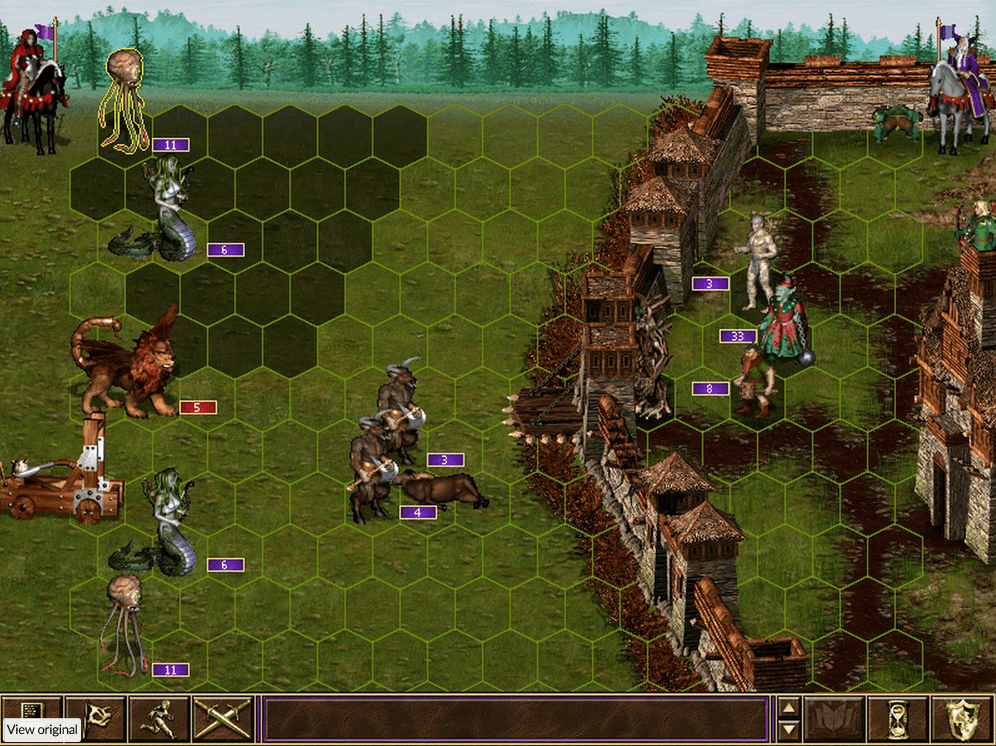
Heroes of Might and Magic 3 is a turn-based strategy game released in 1999 that has become a legendary classic. It maintains its popularity mostly due to nostalgia and recognition, but it remains a very good game, even after so many years.

Horn of the Abyss mod restores access to the multiplayer mode. Even 26 years after the original game’s release, we can see over a thousand players online, despite many players preferring a single-player mode.
Although developers released many other versions of the game, they failed to match the success of the third version. Songs of Conquest is a spiritual successor to the HoMM3, made by an unrelated studio.
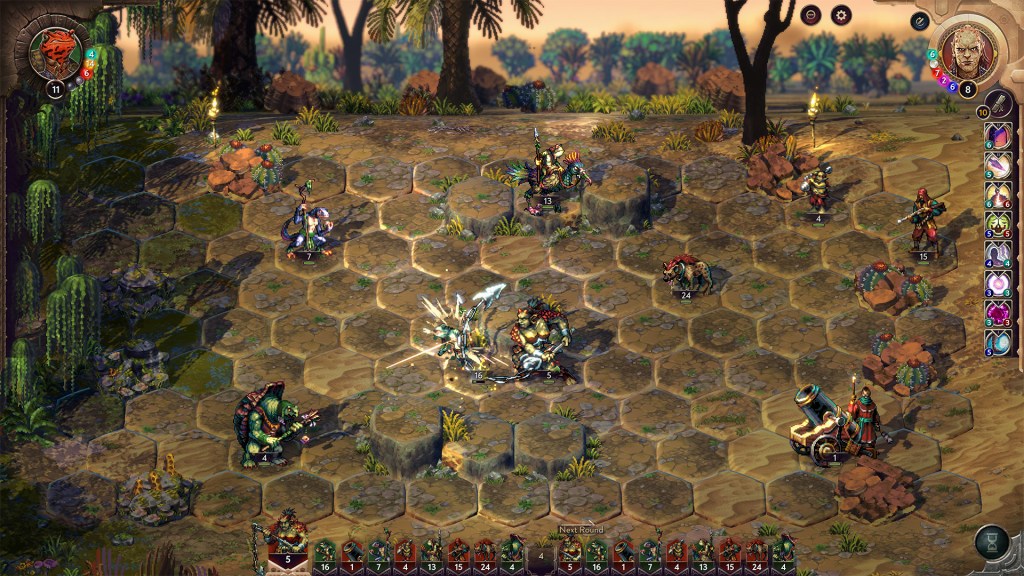

Although Songs of Conquest’s popularity on Steam may not be impressive, it has slightly surpassed the newer versions of the legendary series, which can be considered a success, given that it was created by a much smaller studio that isn’t very recognizable. But still, it’s difficult to objectively compare these games, as each game was also released on other platforms, making it difficult to track their total popularity.
Reduced repetitiveness
HoMM3 offers a huge strategic depth, but it comes with a cost: the gameplay became highly repetitive, especially if you’re trying to maximize your odds of winning. New players will have a blast, but the more they play against skilled players, the more annoying nuances they will notice.
Waiting mechanic
Each unit in HoMM3 can use their action to do one of the following:
a) move and/or attack
b) defend (skips the turn but increases defense)
c) wait (postpones the unit’s turn to ensure that it will move after all the slower units)
d) (rarely) use an special ability
Moving into the enemy’s range means they will be able to strike first, getting a huge advantage. If your units are faster than your enemies, you can postpone your turns to ensure that you’ll be the one able to strike first.

Hobgoblins (on the right) are faster than griffins, but fully advancing them would result in entering the griffins’ reach. AI decided to postpone their turn, hoping that the griffins would be stupid enough to enter their range.
Ranged attacks are less precise against targets that are far away, meaning that it’s often better to attack enemies that are closer. If your shooters are faster than the enemies, you can postpone their turn by waiting, so they will be able to deal huge damage immediately after the slow enemies move closer.
Where is the issue? Once a smart player fills the army with fast units, almost every combat encounter will start with mindlessly spamming the “Wait” button, making it feel like some sort of mundane obligatory ritual. It may add up to hundreds or thousands of skips over the course of a single match.
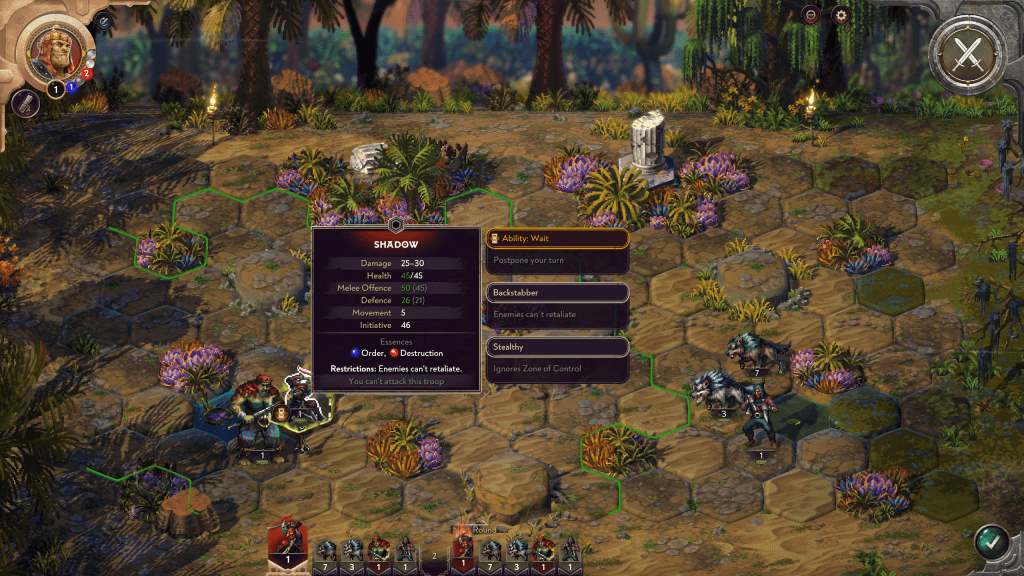
In Songs of Conquest, only a few units have the “Wait” ability, making it an interesting, rare occurrence.
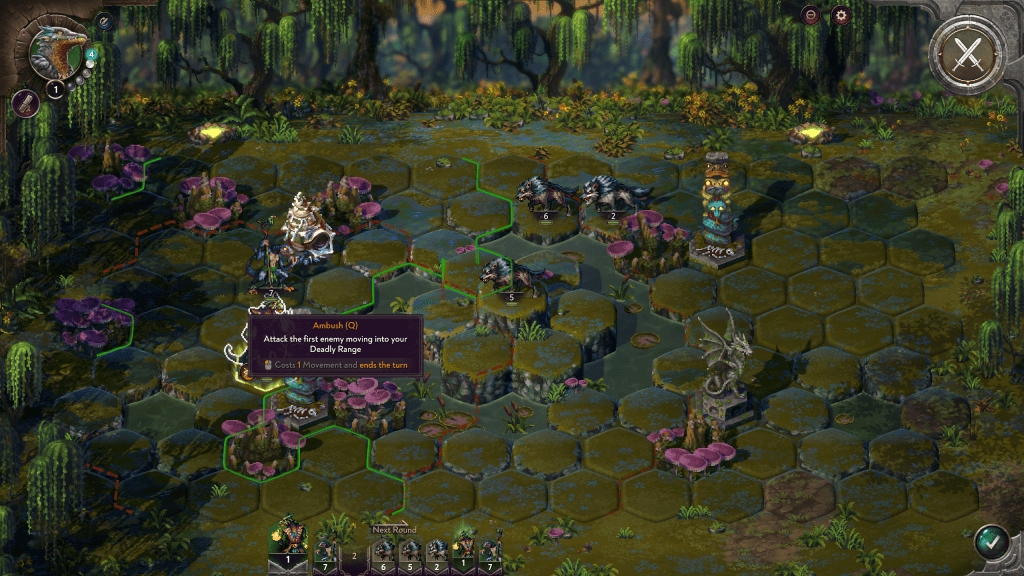
A lot of abilities cost only 1 movement, meaning that your unit can still move a bit before using the ability. Even if skipping or using an ability feels like skipping the turn, the movement possibility adds a meaningful tactical feel to it.
Single-unit stacks (aka 1-stacks)
Each army has up to 7 unit stacks, where each stack can contain an unlimited number of units of the same kind. Players have figured out that at the early stage of the game, it’s the best strategy to split their weakest stack type into as many 1-stacks as possible. Because of this, skilled players must usually manually split their army before each combat and repeat their orders for each individual stack.

1-stacks are often used as a meat shield to protect your more valuable units, especially ranged ones. Once an enemy enters the melee range of your ranged unit, it can no longer shoot and receives a melee penalty (that halves its damage). Since each stack can retaliate against melee attacks once per combat turn, attacking an enemy may now bring more harm than benefits. A barrier of 1-stacks in front of your ranged units will ensure that your shooters can safely shoot for an extended period.

An enemy’s stack may be able to kill many units in your stack, but this advantage is meaningless if the only stack they can attack is a 1-stack. Once they kill your meat shield, they open up the path for your regular squad to attack them with initiative, decimating them. If your main stack isn’t strong enough to kill them, they will retaliate, heavily injuring your army. This is where your other 1-stack may come in handy – you may attack with them to soak the enemy’s counterattack, and then you can attack with your main stack without retaliation.
The annoying thing about this strategy is that you often have four to six 1-stacks that are inactive most of the time. If all ranged units are yours, it’s wise to not engage in melee combat, as long as you can shoot enemies without taking damage. Smart players will order their melee units to stay idly next to their shooters, skipping every turn until enemies finally reach melee range. During early battles, you skip approximately 1-6 turns per battle with each unit. After playing 20 battles, it will add up to 80-480 turn skips, then you repeat the same process in another game, again and again. It feels almost like a “skip turn” simulator.
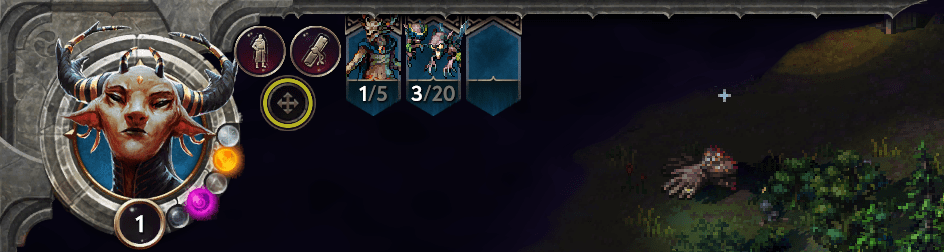
In Songs of Conquest, your hero starts the game with only 3 army slots. It means you can still use similar strategies, but the number of 1-stacks will be heavily limited, meaning you will have to use them much more thoughtfully.

Once your hero levels up, you can choose a permanent bonus for them. The third choice will let you increase the number of slots in your army, letting you either increase the variety of your units or split your army more. Although the possibility of bringing more 1-stacks is beneficial, the choice may be difficult.
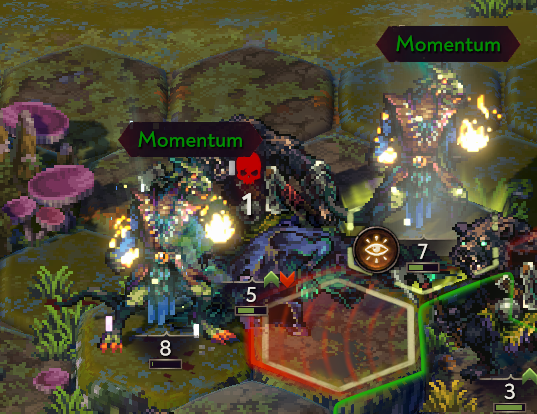
Killing an enemy stack will grant your units Momentum buff, which increases your units’ offence and defence by 10%. It turns 1-stacks into a double-edged sword, as they may toughen up enemies.
Hero movement
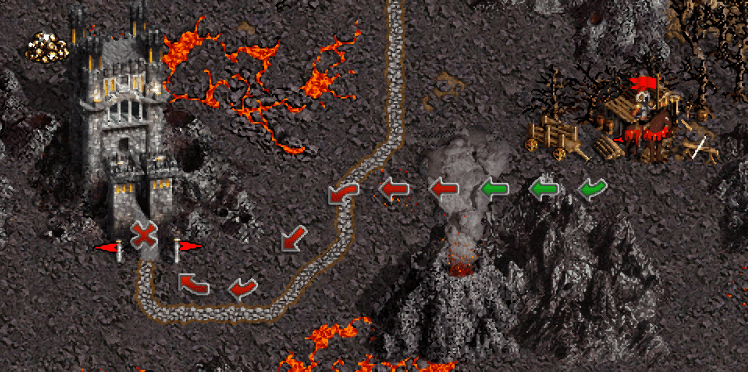
In HoMM3, the speed of your army depends on two main factors: the combat speed of your slowest unit in the army, and the type of their native terrain. These rules are pretty logical – it makes sense that an army filled with slow zombies should move through the world map slower than an army filled with fast dragons. It also makes sense that moving through the swamp should be easier if your units are native to the swamp.
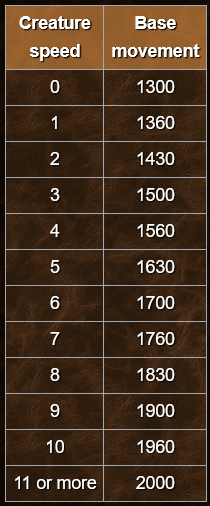
According to the wiki, a hero with the fastest units (11+ speed) will move ~33% further than a hero with the slowest units (3 speed). It means that the faster hero will explore ~33% more locations, engage in ~33% more combats, and earn ~33% more experience.
But why is that an issue? Professional players have figured out that before they end the day (turn), they can use a secondary hero to temporarily take away slow units from the main hero, leaving him with the fastest units only. The next day, heroes restore movement points based on the speed of the units in their army.
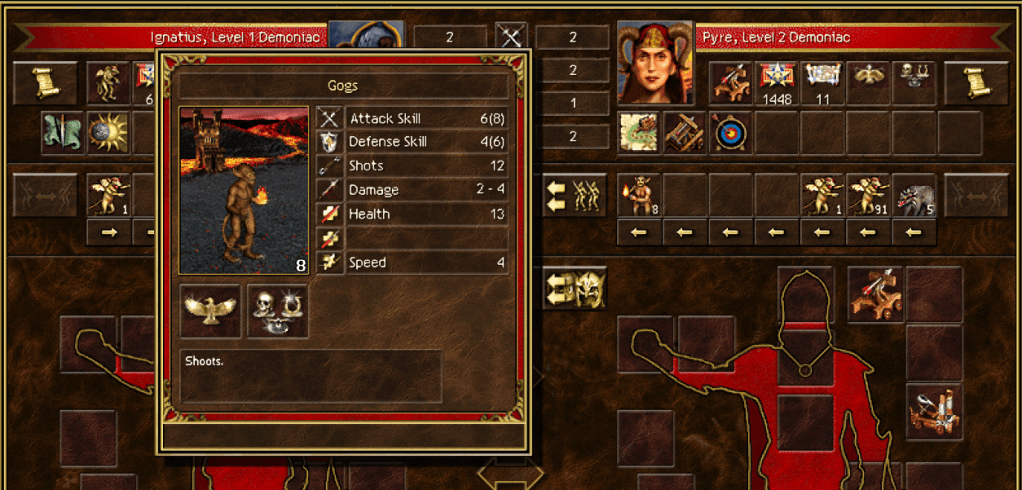
An example trade between 2 heroes. The main hero (the right one) has Gogs with a speed of 4, who are much slower than the Hell Hounds with a speed of 7. Without the trade, the main hero would start the next day (turn) with 1560 movement points. A smart trade will increase this value to 1760 points, meaning he will travel ~12,8% further.
Since the main hero usually zig-zags through the map (due to irregular positioning of objects they want to visit), the secondary hero usually can catch up with them even if they start with fewer movement points. Such an environment encourages skilled players to hire extra heroes, for purpose of swapping their entire armies between heroes at the beginning and end of each day (turn), making it a mundane routine.

Fixing this issue isn’t difficult – all developers had to do was not implement such a mechanic in their game. The movement isn’t affected by either terrain or units.
People who love the strategic depth usually want to retain such game mechanics, as the knowledge of how to exploit them gives them an advantage over other players. It’s up to developers to decide whether they want the game to be enjoyable at every skill level or have more strategic depth at the cost of being somewhat mundane.
Mana regeneration and preservation
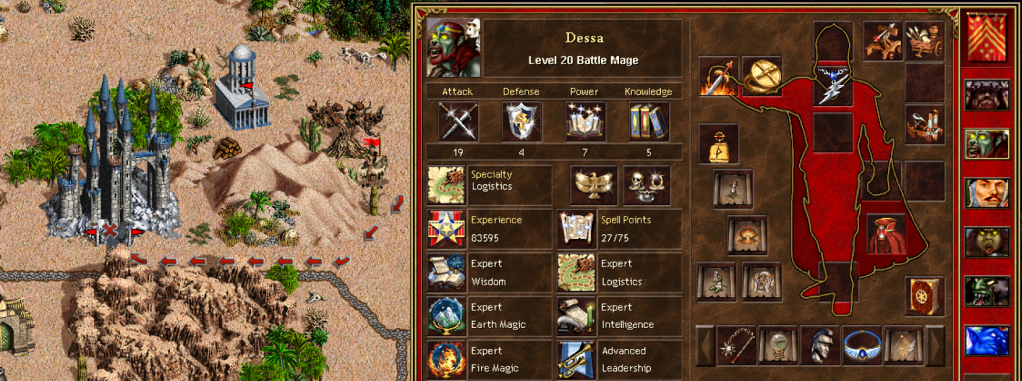
In HoMM3, spell points (a mana equivalent) are retained after combat, meaning that wasting them will result in a lack of spell points during the next combats, leaving them unable to cast their powerful spells. Each hero regenerates only 1 spell point per day, but they can fully recover them by ending the day in a town that has a mage guild. Returning to the town may sometimes take multiple days (turns), and so does going back. It may freeze your progression for a long time, and your gameplay will mostly be about mundane turn skipping.
To make things worse, once you enter a contested territory, you won’t know if and when your opponent will ambush your hero. Having a low amount of spell points puts you at a gigantic risk. Even if you have enough points to claim neutral objectives, it’s wiser to return to your town often, slowing the gameplay even further.
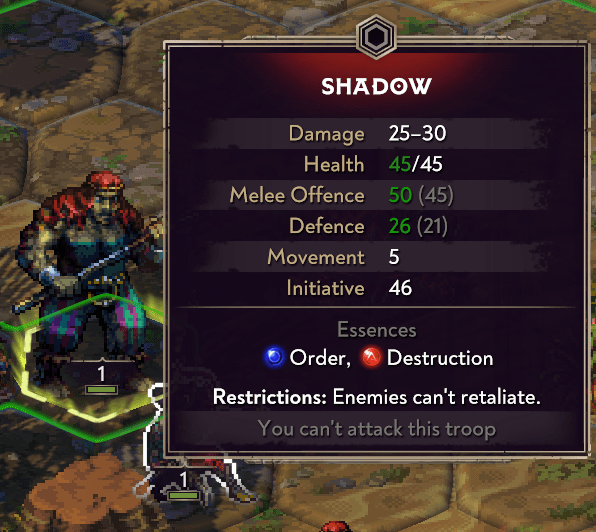
In Songs of Conquest, you use “essences” to cast spells, but they reset each combat. Your units generate essences for your hero every time these units start their turn, meaning that you will accumulate your reserves over time, and your spending won’t affect future combats. It removes the strategic depth related to mana preservation, but it greatly improves the game’s pacing by eliminating mundane actions.
Item juggling
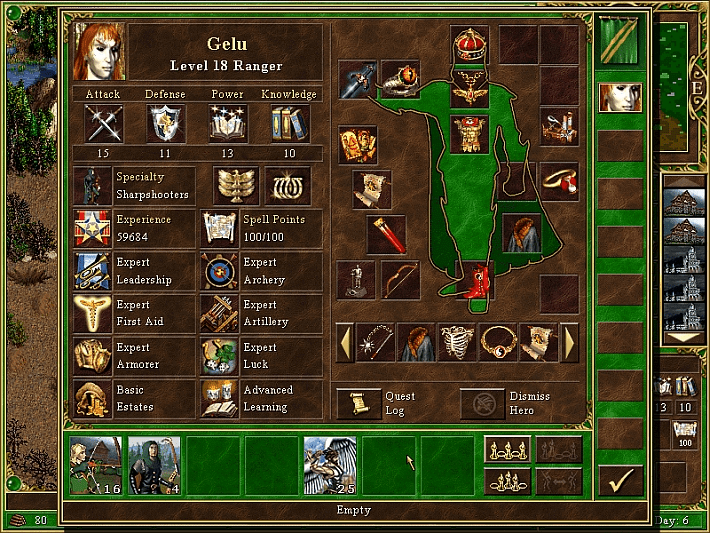
A hero can only equip 1 item in each slot, meaning he can’t benefit from multiple items of the same kind. However, bonuses from items are situational. For example, an item that boosts spell points regeneration works only at the beginning of the day (turn) when spell point regeneration is applied. It means that such an item will be useless during the rest of the day, and the player should replace such an item with any item that could somehow benefit them. Then, at the end of the turn, he replaces it with a regeneration item and then repeats the whole process again each day (turn), probably for 20-400 days.

Even if an item says it increases “movement points,” it only increases movement points regeneration and is useless during your turn. Players can replace such boots at the beginning of the day with any other boots (e.g., boots that give advantage in combat), do their turn, and then swap their boots again at the end of the day. If such a player also has Wayfarer’s Boots, he will equip them between combats to ensure he can progress through the map without any penalty, and then swap them just before combat.
There are plenty of other examples of item situationality, such as bonuses to necromancy (ineffective against non-living enemies), items that protect you against particular spells (useless against neutral enemies who can’t cast spells), items that increase scouting range (useful only outside of combat), resource generators (useful only during resource generation at the beginning of the day) and so on.
Although Songs of Conquest hasn’t gotten rid of this problem, it hasn’t implemented some mechanics, such as out-of-combat essence regeneration or bonuses against movement penalty. You may still want to occasionally juggle the items, but the frequency will be overall lower.
Item-juggling problems could also be reduced by restricting certain effects to specific types of items. For example, if all boots provided only the movement bonus, there would be no reason to swap them before combat.
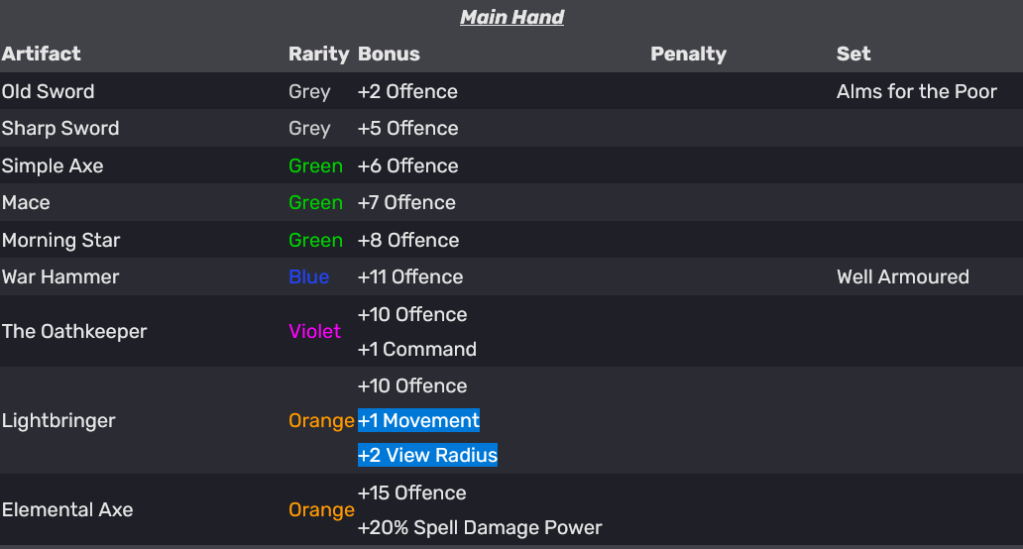
Although most weapons in Songs of Conquest don’t give you out-of-combat bonuses, one item does, occasionally encouraging you to swap your items just before and after the end of a combat.
Army growth
In HoMM3 new units become available to recruit at the beginning of each week. If you’re stuck, you can skip 7 days to recruit more units and potentially break through problematic wardens. The bigger the advantage you have over enemies, the smaller your losses will be during the combat. You can keep stacking your units endlessly, slowly turning dozens of units into thousands. For some players, it’s a source of dopamine.
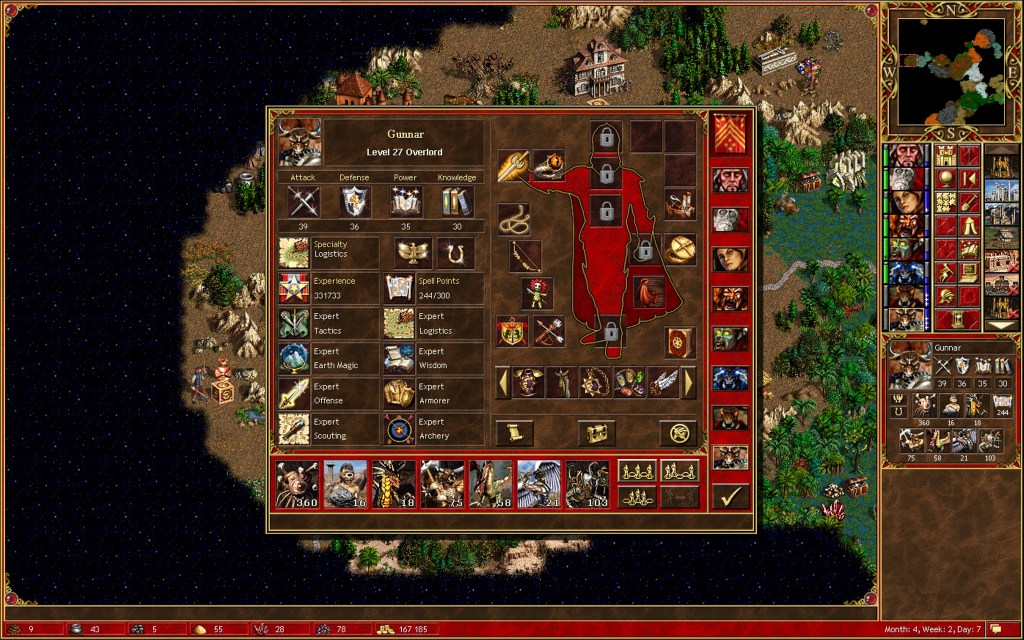
A screenshot made by one of the HoMM3 players. That player definitely enjoyed grinding their army and takes pride in their results.
While making the right calls is an important step in the gameplay, some people may be disappointed that you can “progress” the game by endlessly waiting.
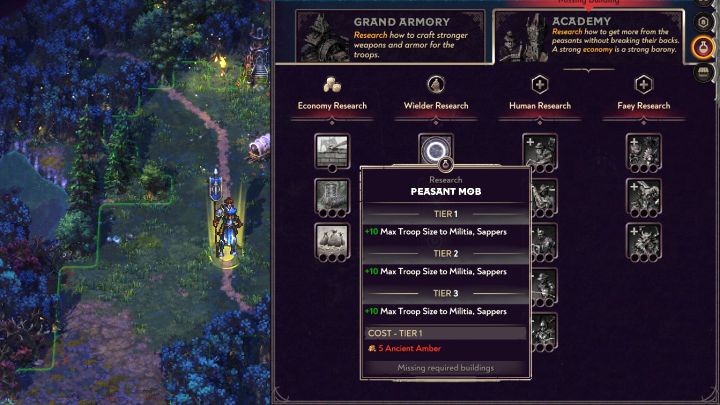
In Songs of Conquest, each unit type has a limit of units in a single stack. At some point, you’ll reach the limit and you won’t be able to increase your army’s strength anymore. From this point, the only opponents can strengthen their armies, which puts pressure on the player to engage in combat while the opponent is still behind. In the late game, players may spend resources to upgrade the limit a few times.
The issues with the army’s growth become bigger if you’re playing on a poorly designed map that may generate stalemates (such as small 1v1 maps with only two towns available). If both players are equally strong and defending in their town gives them bonuses, they will probably defend in their town, especially if all interesting objectives have already been claimed. Technically, both players will progress each week, but their relative strength will remain the same, as they both will progress at the same pace.

In Songs of Conquest, players can defend their towns, but their buildings are not protected with such defense. You may pillage an opponent’s buildings, preventing them from working. Without the buildings, the opponent will lose their source of extra income and army growth, meaning that each day will put a defending player at an even bigger disadvantage.
Hero limit
Even though each hero costs gold, having multiple heroes gives a huge advantage. For example, you can make conquests with your main hero, but collect resources with a secondary hero, meaning that the main hero won’t have to spend their movement points on trivial tasks. If your hero is far away from your main town, you may spread your secondary heroes between to ensure that you can quickly transfer a freshly recruited army from your town to your main.
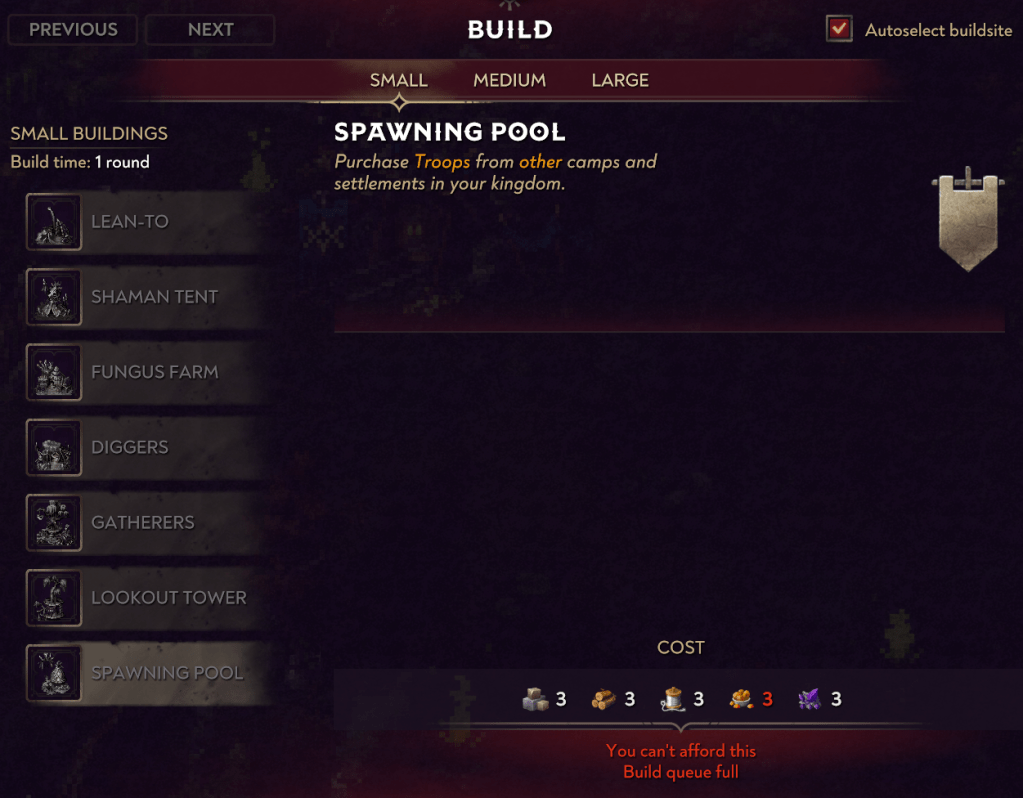
In Songs of Conquest, players may build a rally point that lets them recruit units from far away. After that, players no longer have to manually deliver them with heroes, which saves a lot of mundane work.
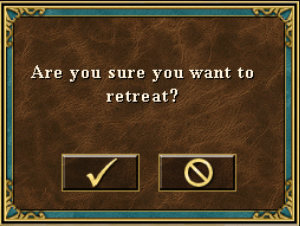
Some HoMM3 players figured out that they can exploit game mechanics to quickly move their main hero and army to a town far away. If they have multiple heroes between these two points, they can use them to transfer the army, then send their main hero on a suicide mission, so they can retreat, and rehire the hero in the town’s tavern for a price of 2500 gold. It’s an interesting strategy, but you have to spend a lot of time positioning each hero accordingly.

In Songs of Conquest, your wielder (hero) limit increases with each new town and certain town upgrades. It greatly weakens early game exploits.
Improved intuitiveness
HoMM3 is filled with a huge number of arbitrary rules. Even though many of them are logical, a newcomer usually wouldn’t expect them. Hero movement points mentioned earlier are a great example – it’s logical that slow units would slow down the hero’s army, but a new player probably won’t notice that unless someone tells them to. It’s easier to notice that some terrains are much more difficult to move through, but figuring out the rules behind that isn’t easy, since sometimes difficult terrain slows you down a lot, and sometimes it doesn’t. Sometimes mixing units from different factions slows you down, sometimes it doesn’t.

One of the weird mechanics is morale (represented by the bird on the picture above). If your unit has a high morale, it may occasionally gain an extra turn. Units seem to have 1 morale by default, and leadership increases the morale by 3, but these bonuses add up to… 3 birds? It’s unclear whether it should be counted as 4 morale or 3 morale. Also, what’s the difference? Turns out that each point of positive morale increases your chances of an extra turn by 1/24, and each point of negative morale increases your chances of losing the chance to act by 1/12.
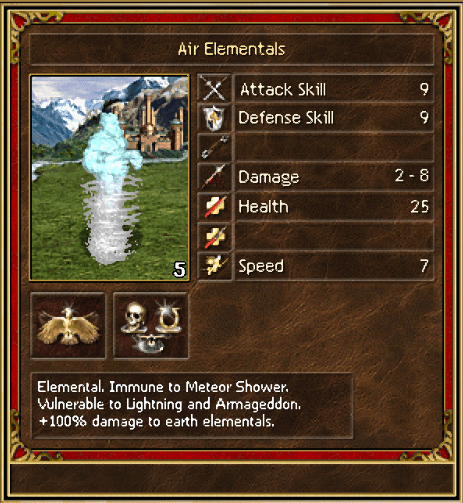
Air Elementals are an example of a unit that has a huge number of arbitrary rules, and they lack tooltips. Even though you will probably figure out what most of them mean, some may take you by surprise. For example, this description means that they can’t get morale bonuses, are immune to the spell “Frenzy,” and deal bonus damage to Magma Elementals. Is there anyone who guessed that solely on that description?
One of the commonly misunderstood mechanics is Attack and Defense. Players usually assume that each point of Attack increases damage by 1, and each point of Defense reduces it by 1. In reality, each point of Attack over an enemy’s Defense increases the damage by 5%, while each point of Defense over an enemy’s Attack reduces the damage received by 2,5%. To make things even more confusing, a Defense advantage of 40 will reduce the damage by only 70%. Doesn’t add up? Oh, it’s just an arbitrary cap, there are no benefits for having more than 28 points of Defense advantage.
Songs of Conquest avoided implementing many game mechanics that could be confusing, such as morale, luck, or terrain penalty. It also displays values that are much more logical (such as displaying the hero’s movement as a number of tiles he can travel).
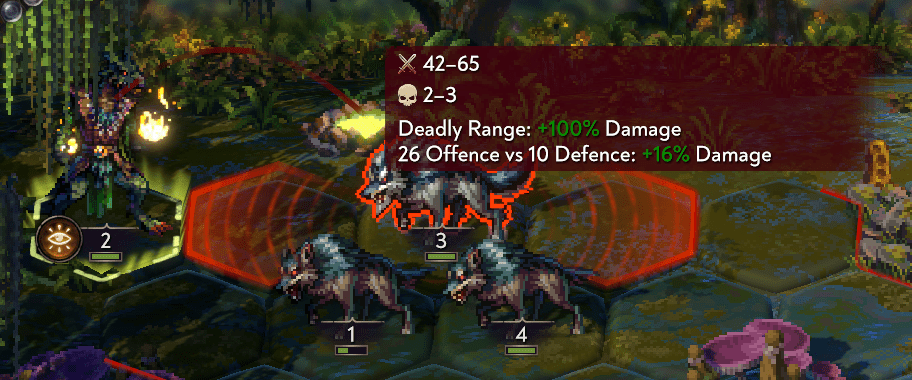
In Songs of Conquest, the details of the damage calculation are displayed when you hover your cursor over a potential target. Since all of them are listed, it’s easy to figure out all the factors that could affect the gameplay. Instead of arbitrary numbers (such as 5% per Attack or 2,5% per Defense), each point of stat gives you 1% bonus.
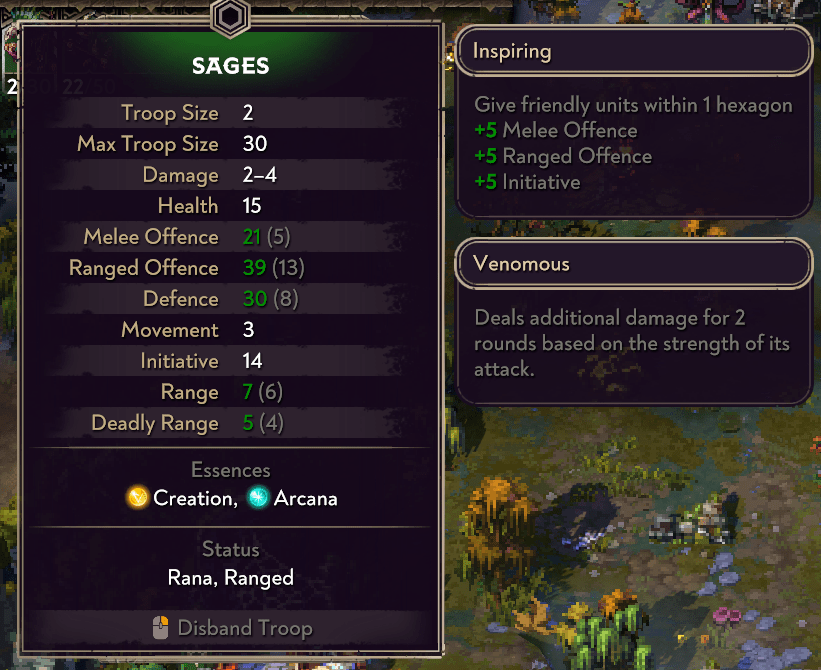
When inspecting a unit, you will be shown a detailed description of each of its abilities. It’s a standard nowadays.
Faction and town issues
HoMM3 offers 9 factions to choose from. On most maps, players usually start with one castle each and may capture additional towns as they expand their territory. Since there are only 7 slots in the hero’s army, and each town offers 7 different units, there is no room left for units from different factions, unless you get rid of some units from the original faction. Capturing a town of the same kind is usually the most beneficial, since it lets you stack units from both towns. It may make the game feel unfair, since one player may get much luckier than others, especially if players play on a randomly generated map.
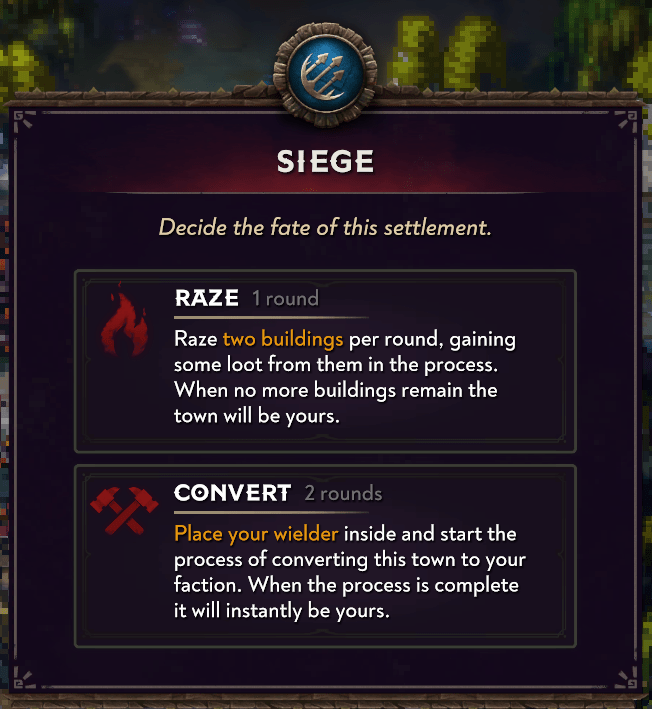
Whenever you defeat a settlement in Songs of Conquest, you may choose to instantly raze it or convert it. The first option is great if you’re in a hurry or you can’t defend against an incoming opponent. The second option lets us take control over the settlement. Since it also changes the town’s faction, there are no issues with faction mixing.
When it comes to town development, it may be interesting at the early stages of the game, as players plan their build order. For example, one player may focus on buildings that allow them to recruit fast units, enabling them to quickly traverse the map and begin battles with the highest initiative. People are also fond of buildings that improve their hero, upgrade their economy, give them ranged troops, or unlock access to the strongest units.
Eventually, players can build every building available for their faction, and they can only build each building once. After building the key buildings, other choices become largely irrelevant, as they have a minimal impact on the gameplay. Sometimes, the only reason to build some buildings is the excess of resources.

The Escape Tunnel is an example of a highly situational building. It’s useful only when the opponent sieges your town and only if you’re actually losing. It may be useful if this building is built in the contested zone, but it’s completely useless if the town is safely hidden far away from the opponents.
In Songs of Conquest, you can build any building you want, as long as you meet its restrictions, have enough resources, and have an empty slot. You can even build the same building multiple times, making towns highly customizable.

There are 3 types of building slots: small, medium, and large. You can build small buildings anywhere, but you can build large buildings only on the large slots.
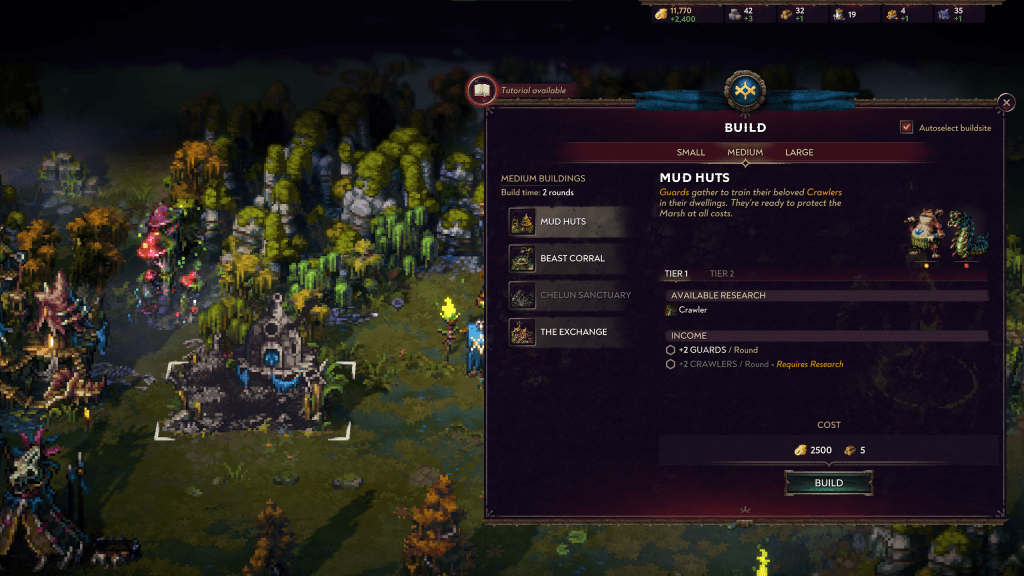
Even though building more creature dwellings is tempting, the choice isn’t easy, as sometimes it will block your access to other essential buildings, such as The Exchange, which is a trading building. You may eventually unlock more building slots as you upgrade your city’s level or conquer new settlements.
Huge restrictions in Songs of Conquest make settlement conquering even more appealing, as sometimes it allows you to build something you couldn’t afford earlier. Even if you don’t need to recruit more units, you can invest in the economy or research. If you desperately need a different building than your current ones, but don’t have any other building slots, you mad demolish an existing building to free its place, which may be handy once you convert a settlement previously managed by your opponent.
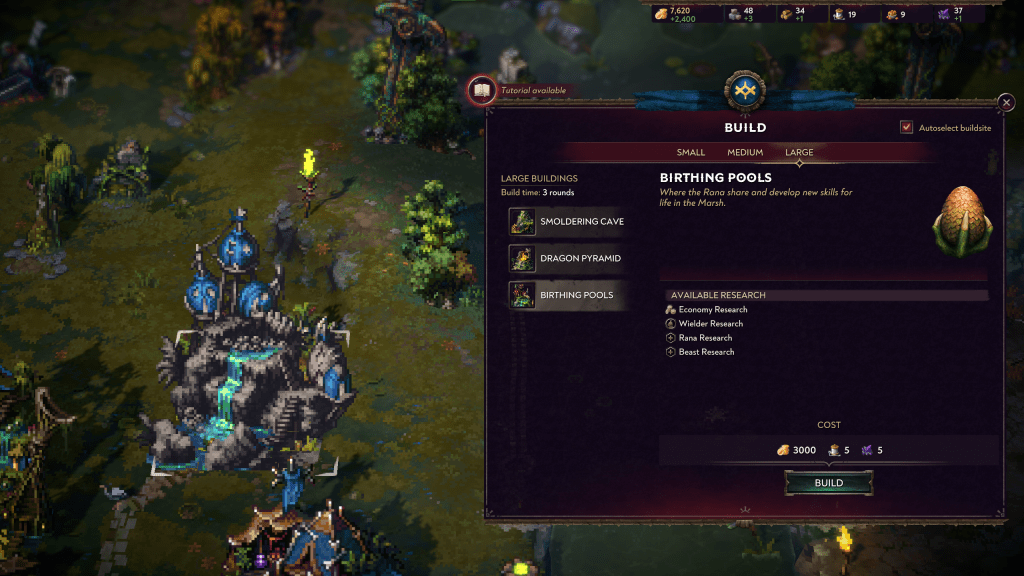
The number of large slots is even lower, making the choices even tougher. Units made in such dwellings are powerful, but research buildings may grant you a long-term advantage.
Spell system
The spell system in HoMM3 has two annoying issues, and the first one is randomness.
Heroes, upon leveling up, may upgrade an already learned talent or receive a new one, where both options are randomly selected from the pool. Heroes can have up to 8 such talents, and upgrade each talent up to the third level. Expert mastery of a magic school is a huge deal, as it doubles the strength of many spells, reduces their cost, and often makes them affect more targets. For example, a regular Slow spell reduces the speed of the target enemy by 25%, but an expert Slow will reduce the speed of all enemies by 50% at a lower cost, which is a gigantic difference. The issue is that sometimes you will never get the opportunity to pick the talent you want.
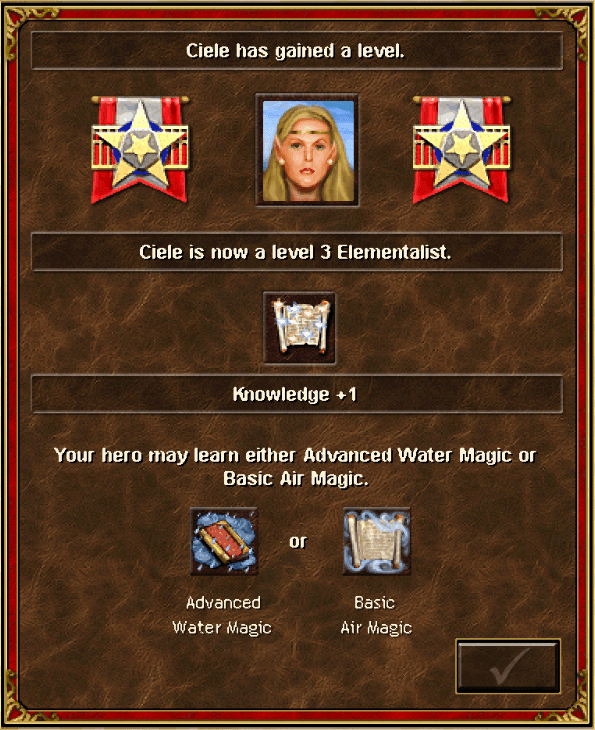
An example of a hero’s level-up. This player had the opportunity to learn Air Magic, but they would rather wait for a chance to learn Earth Magic or Fire Magic.
Even if you master the magic school you want, it doesn’t mean that you will be able to cast powerful spells. As stupid as it sounds, your heroes may not know any magic of the school you’ve mastered. The reason is simple: you learn spells by visiting a mage guild that has a set of random spells. If you want to learn more spells, you need to upgrade the mage build to a higher level or visit another owned town with such a guild. You may also learn some spells by exploring neutral objectives such as spell shrines, but they’re still random.
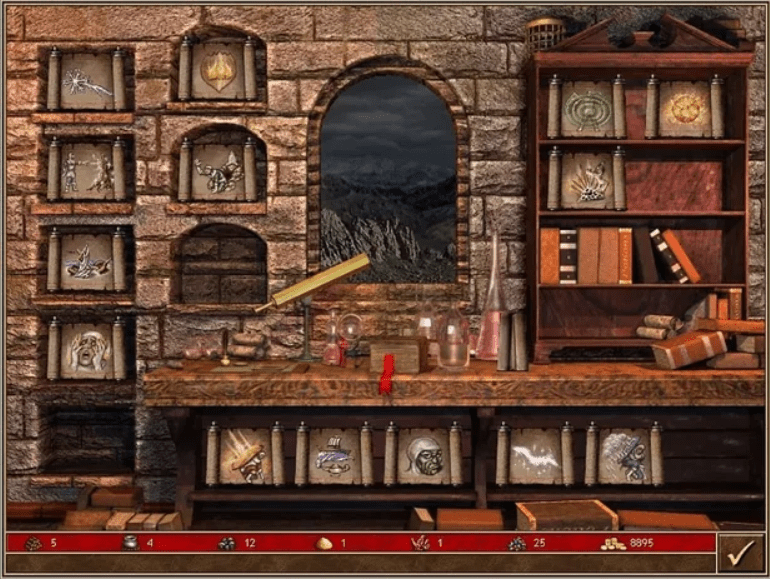
An example of an (un)lucky Mage Guild. It has great fire and earth spells, but it doesn’t offer anything interesting for air mages. If your main hero isn’t specialized in fire/earth magic, you will have a hard time.
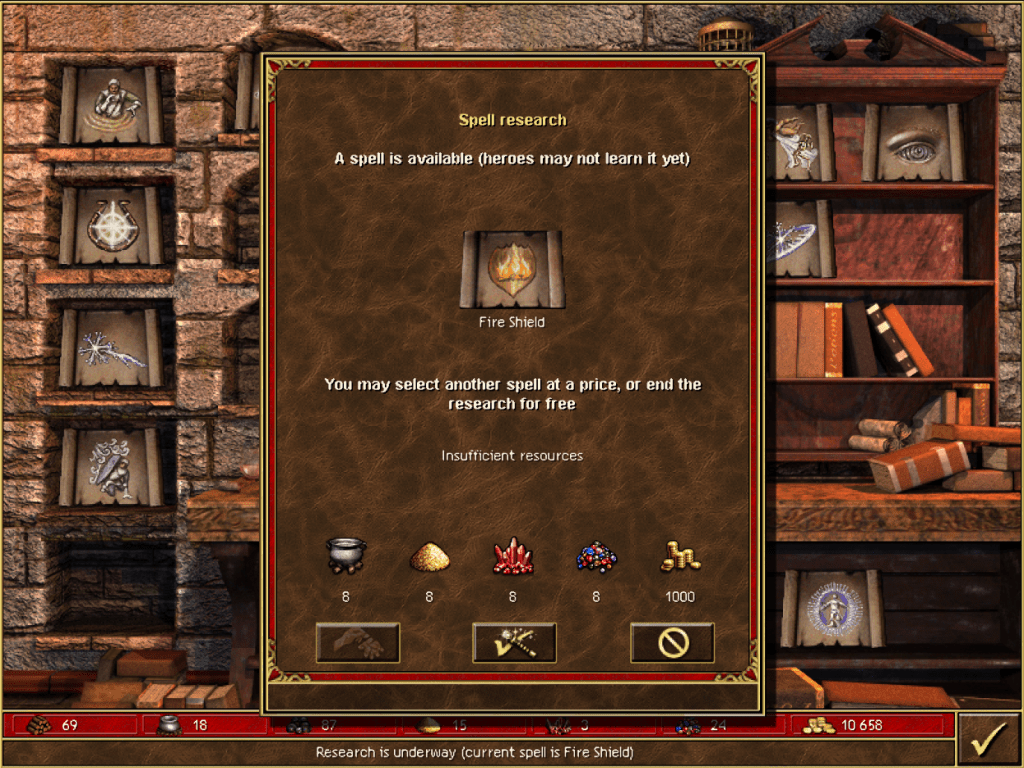
Horn of the Abyss is a HoMM3 mod that implements numerous changes. It tried to address the issues of the Mage Guild by adding a Spell Research feature that lets you re-roll a selected spell from your Mage Guild for a pretty huge cost. It occasionally helps, but it’s still quite random.
In Songs of Conquest, each player has access to all existing spells. Players are only restricted by essence cost. Since the generated essence depends on the troops you have in your army, you can build your dwellings accordingly to recruit needed units and meet these needs. It creates an interesting progression system while keeping the randomness factor low.
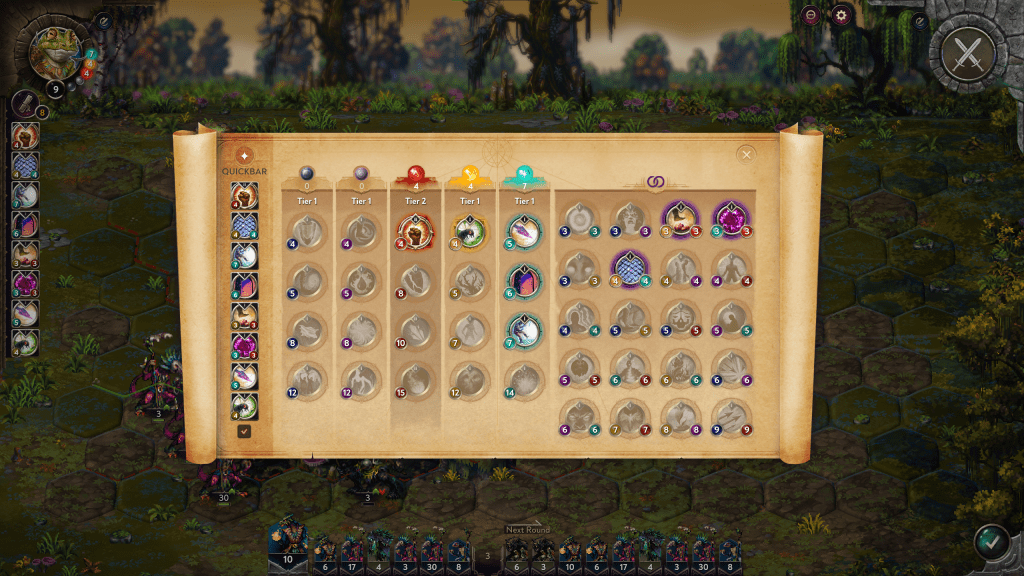
An example of a spell book. Since the player has generated red, yellow and teal essence, he can cast a few spells of that type or some mixed ones.
Another problem with the HoMM3 spell system is how impactful some spells are. The player with the fastest unit is able to cast a spell first, which may have a devastating effect. For example, an expert Prayer can increase the speed of all allied units by 4-7 (depending on the situation), which results not only in greatly increasing the initiative of all units, but it also lets you reach your enemies on the same turn, decimating some squads even before they’ll be able to act, and forcing enemy shooters to fight in melee range, making them almost useless.
The strength of spells varies depending on the game duration. Damaging spells usually work better when players have a low number of units, while buffs and debuffs shine more when players have a huge number of units. For example, an expert Berserk spell will force units in the target area to attack the closest target, meaning that not only will they skip their turn, but also heavily damage their allies. It may be used to make useless even 4 enemy squads, leaving him with only 3.

Some players figured out that they can attack an enemy hero with a small single stack of fast units, cast a spell that heavily damages enemy stack(s), retreat after that (losing the few units you had), recruit that hero in the tavern, and repeat the process. That way, you could decimate the opponent’s army without major losses, and then finish them off with your regular army. This exploit was banned in the previously mentioned Horn of the Abyss mod.
Such nuances may significantly alter the winning odds of some players simply because one unit has a greater speed than units from the opponent’s army, even if the speed difference is as low as 1 point.

Conflux faction will always move first as long as they bring Phoenixes (21 speed) to the battle. A lot of units from that faction have some magic immunity, which may make it even more frustrating.
As mentioned earlier, in Songs of Conquest, your essences are reset at the start of the battle. Your hero may have extra essence regeneration from various sources (talents, items, buildings, research), but usually you won’t be able to start the strongest spells, and even if you do, their strength won’t be as devastating as it was in HoMM3. Since essence is generated slowly over time, your spell casting is also spread over time, and becomes less frequent with each unit stack you’ve lost.
Final conclusion
To be honest, issues with HoMM3 aren’t very problematic for the new players (especially if they’re only playing the single-player mode). They won’t be aware of many of them, and a lot of issues are exploits that are being used only by skilled players. By the time players figure them out, they will already be used to the first encountered ones and quickly adapt to the further ones.
Although Songs of Conquest appears to address many issues, many of them seem arbitrary in isolation. To appreciate them, players would probably need to understand their origins. By fixing some problems, it also lost some of the other game’s charm. There is a chance that SoC would not surpass HoMM3‘s success, even if it had better recognition. However, it’s still an interesting study.
 Game Anatomy
Leave a comment