We, people, are easily tricked by the way the world is presented to us. Sometimes, even a minor change can affect our judgment. It can be caused by something as simple as a visual effect, sound, or written text.
Subconscious assumptions
People who encounter a situation similar to previously encountered ones, often subconsciously assume that it will align with a correlation typical for previous encounters. For example, since larger enemies are usually more dangerous than smaller ones, after seeing a large enemy, we will often assume that it may be more dangerous than a regular one. In reality, small enemies may occasionally be even more dangerous than the big ones.
An incorrect assessment may lead to misleading conclusions, which can potentially alter the user experience. If some obstacle looks too challenging for players, they may decide to avoid it. Properly adjusted visuals and audio may help guide the players.
In the game “Wolfenstein: Enemy Territory,” players subconsciously assumed that one gun was better than another one, even though, in reality, both weapons were equally good mechanically. The source of the problem was the louder sound of the mentioned gun – since louder sounds usually correlate with more power, people intuitively assumed that it was more powerful. It made their wielders more confident and aggressive, resulting with a better results, even though, on the paper, it shouldn’t happen.
Blind trust
While some people prefer to trust their guts, others prefer to trust a written text. However, not every documented thing is the truth. For example, in the game “Cruis’n USA,” each car had a different set of stats, supposedly affecting gameplay, but these stats had no impact on the game. Unaware players could genuinely believe it, thinking that the game was more interesting than it actually was.
In the past, patch notes in “League of Legends” mentioned a nerf of the Vladimir, one of the playable characters. Players started to pick this champion less frequently, played it less confidently, and their win rate dropped. The funny thing is that developers actually forgot to ship the nerf.
Players’ blind trust, in a way, makes them less reliable, as their opinions may not align with reality. During communication, it may be a good idea to assume that incorrect information on either side is a possibility.
One of the developers behind the “Counter-Strike” game admitted that he once artificially lowered the latency pig displayed in the game’s UI by a huge amount. Players who previously complained about the delay were amazed by this change, thinking that the connection really improved.
Bluffing mind games
Game developers may occasionally provide players with false information to manipulate the thrill caused by the game. If the stakes are presented as bigger than they actually are, the player will be able to experience more excitement without having to deal with severe consequences if he fails.

In the game “Hellblade: Senua’s Sacrifice,” there is a game mode called “Dark Rot,” which is supposed to have higher difficulty, allowing players to make mistakes only a limited number of times. The game threatens that their progression will be lost once they pass that limit. However, even players who purposely tried to trigger this event failed, indicating that it was likely a bluff intended to make the game more thrilling.
Sometimes, games may adjust the odds of players’ success behind the scenes, depending on their typical expectations or current state. For example, in some shooter games, such as “Metal Gear Solid V: The Phantom Pain,” enemies always purposely miss the first shot to prevent players from feeling like the game is unfair toward them if they are spotted by an unseen enemy. The “warning” shot feels like a real threat, but gives them an extra time for reaction. There are also games (such as “DotA 2”) that apply pseudo-randomness to reduce the odds of extreme scenarios, such as multiple critical hits in a row. This means that the real odds don’t always align with the displayed values, but still remain fair.
Cosmetics
Even though some game elements are not intended to affect gameplay, they may still have an impact on it on rare occasions. For example, if your character wears a costume that greatly changes its appearance, your enemies may struggle with figuring out what kind of character you are playing. To create a fair environment, it’s important to ensure that even cosmetic items are consistent enough to not cause unnecessary confusion.
Developers of the game “League of Legends” decided to ban some champion skins from the competitive scene. Different skins were banned for different reasons, but all the issues were caused by some degree of inconsistency.
Intuitiveness
Sometimes developers add extra visuals or audio to make the game more intuitive or easier to understand. A simple solution is to refer to something people already know and understand well. For example, if players struggle to understand how probability works, developers may visualize raw numbers using a die or a deck of cards. That way, even a child would be able to easily understand how randomness works.
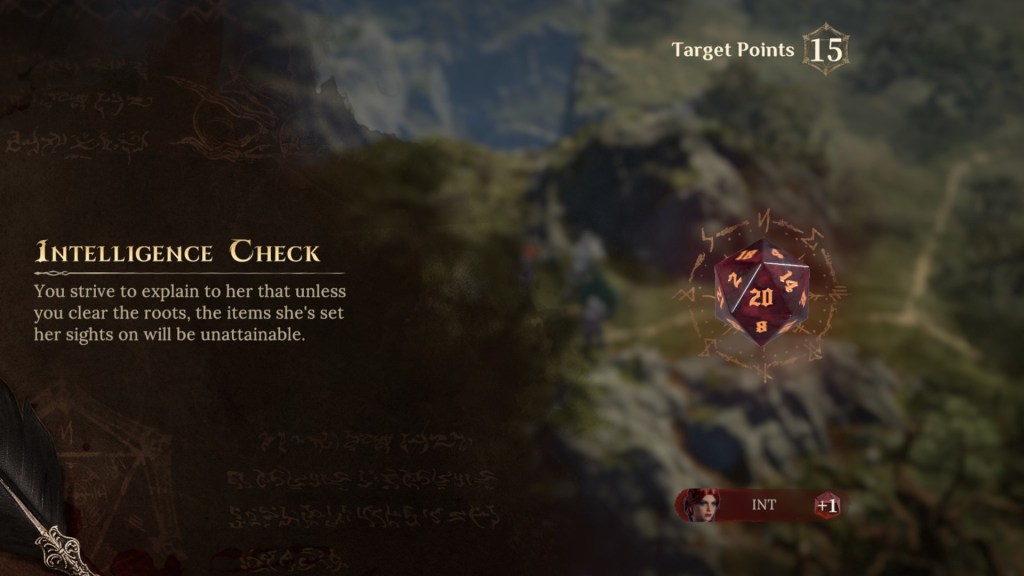
Visualization can also have other perks. For example, it can be used to build up anticipation during the roll. Some games, such as “Dragonheir: Silent Gods” use them also as a reference to real tabletop games.
Players are more likely to be suspicious of things they can’t see and verify. Visualizing game mechanics helps build trust with players, even if it doesn’t necessarily prove the game’s fairness.
The illusion of choice
Developers often want their games to feel more interesting than they actually are. Unfortunately, making such a game requires much more effort. This is why game developers often trick players into thinking they have more agency and freedom in the game than they actually do. A simple example is a dialogue choice, where each option leads to the same outcome. However, finding out that they were tricked could disappoint them. Why does it work then? Usually, it’s because the game doesn’t provide players with motivation or an opportunity to test out what the other outcome would be. Changing the choice often requires a significant amount of effort, such as reloading the previous game state and replaying a notable portion of the game. It’s enough to keep out many players from finding out about these tricks.
A short video created by “Extra Credits” that delves deeper into this topic, providing more examples and explanation.
Summary
There are many ways in which small changes to the presentation may affect the way players feel about a game, and may surprise us in the most unexpected way. Being aware of their existence may prevent us from accidentally misleading players, but it may also open the door to providing them with extra guidance, greater fairness, or increased excitement.
 Game Anatomy
Leave a comment